
Devon Hartmann · 23 September 2026
Decoding Archived Performance Signals in Solo-Run Digital Properties Over Extended Cycles
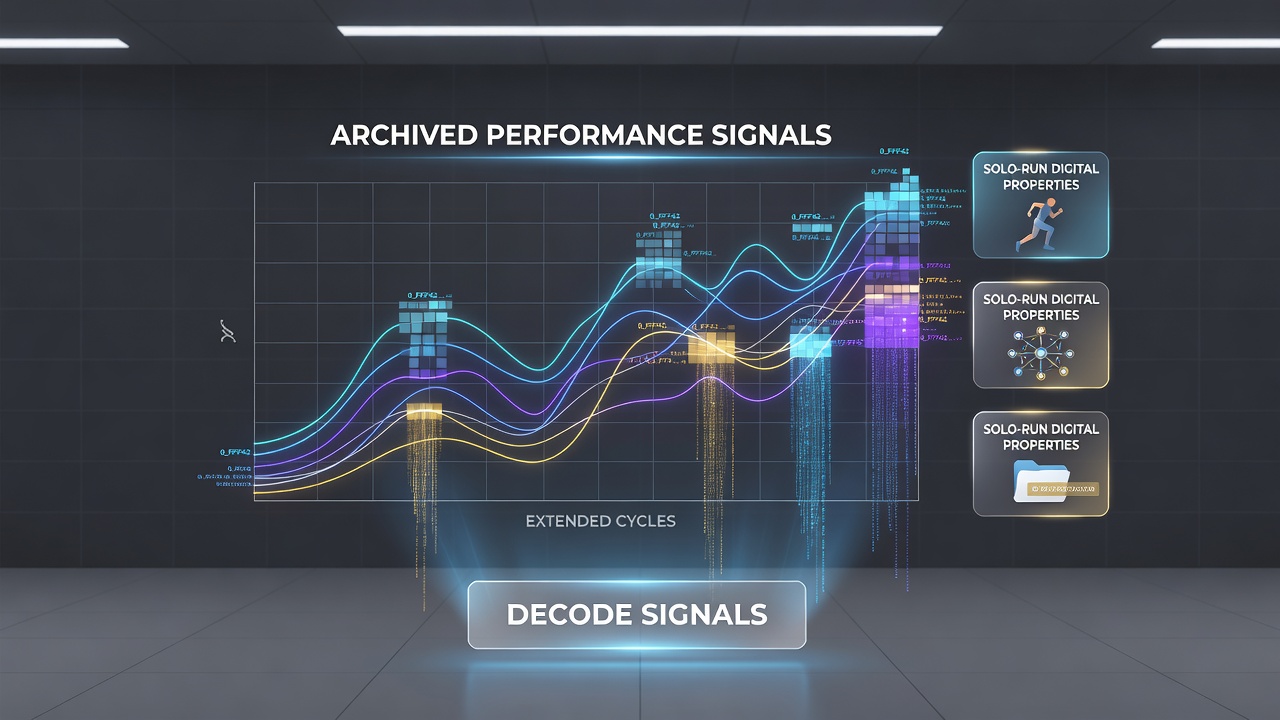
Independent digital properties accumulate layers of historical data that reveal patterns in traffic, engagement, and technical health across extended periods, and analysts examine these archives to identify shifts that short-term metrics often obscure. Researchers track variables such as crawl frequency, indexation rates, and referral sources through tools that preserve snapshots from earlier eras, allowing comparisons between current states and those recorded five or ten years prior. Data from such archives shows that sites operating without large teams experience slower but steadier changes in visibility when external algorithm adjustments occur, whereas rapid fluctuations tend to appear in properties that rely on frequent content refreshes.
Core Components of Archived Signal Analysis
Performance signals stored in archives include server response logs, search engine index entries, and third-party measurement records that together form timelines of site behavior. Observers note that combining these sources requires alignment of timestamps and normalization of units because older records often use different formats than contemporary feeds. Studies indicate that solo operators who maintain consistent logging practices over decades gain clearer views of seasonal effects and long-cycle trends, including those tied to broader economic or platform-wide events. One approach involves mapping historical backlink profiles against current authority scores to determine whether early acquisition strategies continue to influence rankings or have diminished under newer evaluation methods.
Technical Frameworks for Retrieval and Processing
Retrieval systems draw from public web archives, proprietary backups, and API endpoints that export historical datasets in standardized formats. Processing pipelines apply filters to isolate signals relevant to solo-run sites, such as organic search volume changes or mobile responsiveness scores recorded before widespread adoption of responsive design. Figures from industry reports reveal that sites launched before 2015 frequently retain traces of early mobile penalties that newer properties never encountered, creating distinct baseline expectations during comparative reviews. Analysts employ scripting languages to reconcile these discrepancies and surface anomalies that might otherwise remain hidden in raw files.
Patterns Emerging from Multi-Year Data Sets
Extended observation periods uncover cycles where traffic quality metrics rise and fall in alignment with content updates or external link acquisitions, yet the amplitude of these swings often decreases as properties mature. Evidence from longitudinal reviews suggests that independent sites with stable hosting environments maintain more predictable indexation rates across algorithm updates than those undergoing frequent migrations. In September 2026, several digital preservation initiatives plan to release expanded datasets covering the 2020-2025 window, which will allow further validation of previously observed correlations between archive depth and forecasting accuracy. Researchers cross-reference these releases with internal analytics to test whether archived signals can predict performance plateaus that typically appear after eight to twelve years of operation.
Link source diversification appears as another recurring theme, with archives showing that sites relying on a narrow set of referring domains experience sharper declines when those sources reduce activity. Academic papers from European research consortia document similar outcomes across multiple language markets, confirming that geographic and topical diversity in backlinks correlates with resilience over extended cycles. Observers note that solo operators who periodically audit archived referral data can identify emerging gaps before they affect current rankings.
Integration with Contemporary Measurement Practices
Modern analytics platforms increasingly incorporate historical imports that allow direct overlay of archived signals onto live dashboards, reducing the manual reconciliation previously required. This integration reveals whether recent performance dips represent temporary deviations or continuations of longer downward trajectories established years earlier. Data from North American regulatory filings on digital infrastructure shows that properties with thorough archive maintenance incur lower remediation costs when addressing legacy technical debt, such as outdated schema implementations or deprecated protocol usage. Practitioners combine these insights with current crawl diagnostics to prioritize updates that address both historical weaknesses and present requirements.
Case examples drawn from public case studies illustrate how one independent site recovered visibility by reactivating archived content clusters that had been deprioritized during earlier redesigns. Another instance documented by Australian academic researchers demonstrated sustained traffic quality improvements after realigning internal linking structures according to patterns visible only in multi-year log files. These outcomes depend on systematic preservation rather than selective retention of favorable records alone.
Conclusion
Decoding archived performance signals supplies solo-run digital properties with context that spans algorithm shifts, platform changes, and audience evolution across extended cycles. Systematic retrieval, normalization, and comparison of historical records enable identification of enduring factors versus transient ones. As additional datasets become available in 2026 and beyond, the precision of such analyses continues to increase, supporting more informed decisions about resource allocation and technical maintenance for independent operations.