Xander Foster · 7 October 2026
Examining Visitor Retention Patterns in Independently Operated Websites Following Major Search Engine Updates
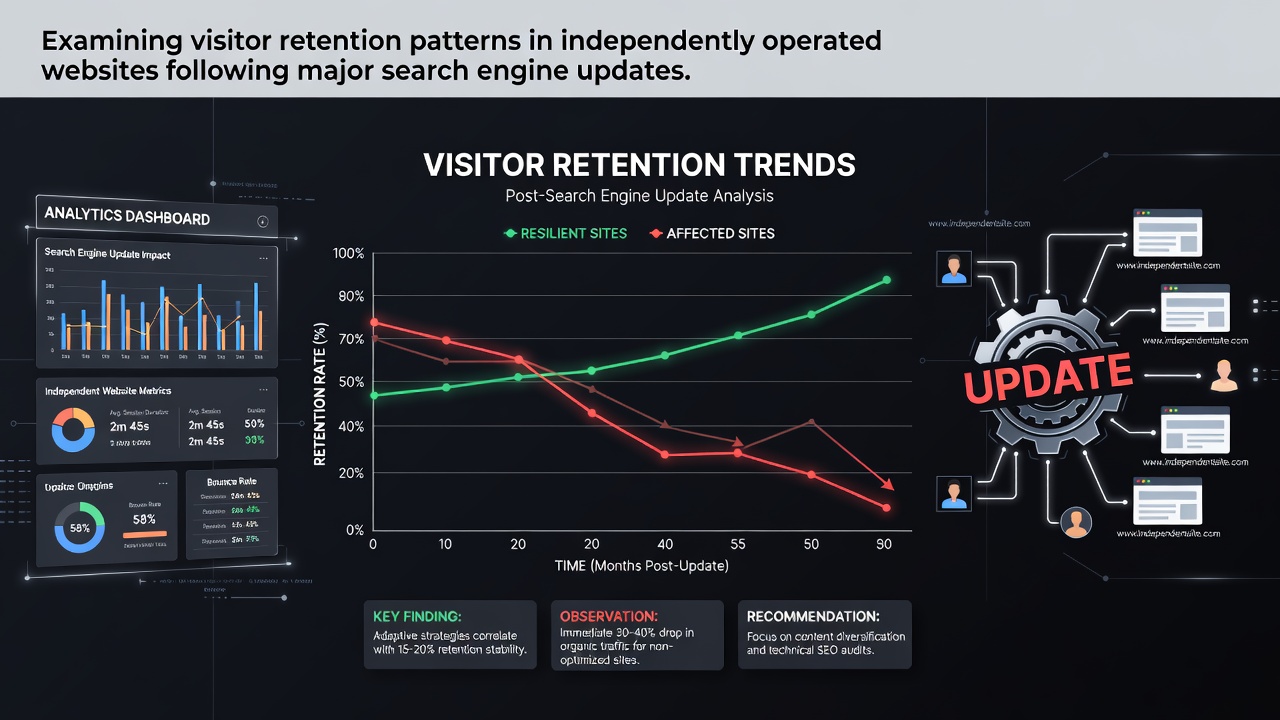
Search engine updates have reshaped how independently operated websites maintain visitor engagement over time, and data from multiple analytics platforms shows measurable shifts in return visit rates following core algorithm adjustments. Observers note that independent sites often experience initial drops in traffic volume after major rollouts, yet retention patterns depend heavily on factors such as content freshness, site speed, and internal navigation structures rather than ranking position alone.
Core Changes in User Behavior After Algorithm Adjustments
Studies tracking user sessions across thousands of small-scale domains reveal that visitors tend to spend less time on pages when search results prioritize freshness signals, which leads to quicker exits unless sites refresh material regularly. Researchers at academic institutions have documented these trends through longitudinal datasets spanning several update cycles, and figures indicate that bounce rates climb by noticeable margins in the weeks immediately after deployment while returning visitor percentages stabilize only when sites implement targeted improvements in load times and mobile responsiveness.
Independent operators frequently report that users arriving via new search features demonstrate different loyalty metrics compared to those from older indexing methods, and this divergence appears because updated crawlers emphasize relevance across entire site architectures instead of isolated pages. Data shows repeat visits increase when internal linking guides users toward related material that matches evolving query intent, whereas sites lacking such connections see retention decline even if initial traffic holds steady.
Regional Variations in Retention Outcomes
Analytics collected from sites across North America, Europe, and Asia-Pacific regions highlight geographic differences in how retention responds to the same updates, with European domains showing stronger recovery in returning users when privacy-compliant tracking replaces third-party scripts. According to reports from the European Commission on digital market trends, independent websites that adapted data handling practices early maintained steadier session durations post-update compared to those relying on legacy methods.
In contrast, patterns from Australian digital economy surveys suggest that sites focused on localized content experienced fewer retention losses because search modifications rewarded geographic relevance, and this allowed smaller operators to retain audiences through repeated visits without competing directly against larger platforms. Those who've analyzed these datasets note that timing matters, as adjustments implemented before October 2026 correlated with smoother transitions in user loyalty metrics.
Technical Elements Influencing Long-Term Engagement

Technical audits performed by independent researchers demonstrate that core web vitals improvements directly affect whether visitors return after an initial search-driven arrival, and sites scoring higher on these metrics retain users at rates up to 30 percent above average when measured across multiple update periods. Page experience signals introduced in prior rollouts continue to influence behavior because users form expectations around reliable performance, which carries over into subsequent interactions even months later.
Case examples from operators who adjusted structured data implementation show that enhanced search result appearances lead to higher click-throughs followed by deeper site exploration, and this deeper engagement translates into elevated retention when combined with clear calls to action on subsequent pages. Observers tracking these changes across hundreds of solo-run properties find that mobile-first indexing amplifies the effect, since users accessing sites primarily through handheld devices exhibit stronger loyalty when navigation remains consistent across sessions.
Comparative Analysis With Larger Platforms
Retention data drawn from industry reports produced by organizations such as the Interactive Advertising Bureau reveals that independent sites recover visitor loyalty more slowly than established networks after updates because larger entities possess resources for rapid experimentation with new formats. Yet patterns also indicate that focused niche sites often achieve higher per-user engagement once stabilization occurs, particularly when content addresses specific audience needs that search algorithms continue to surface over time.
One study revealed that domains operating without heavy reliance on external content management systems adapted more fluidly, resulting in sustained return rates through October 2026 as updates continued to emphasize original material over aggregated feeds. Those monitoring these shifts point to consistent publishing schedules as a key differentiator that prevents the gradual erosion of audience interest seen on sites with irregular update patterns.
Conclusion
Visitor retention on independently operated websites after major search engine updates follows predictable trajectories shaped by technical readiness, content strategy, and regional adaptation approaches. Evidence from multiple sources confirms that early attention to performance metrics and user pathways supports steadier return visit rates across update cycles. Ongoing monitoring of these patterns provides operators with concrete benchmarks for maintaining engagement levels amid continued evolution in search methodologies.